


Last week we heard in the press, from Phil Jagielka, that life as an England player is a more relaxed affair under Roy Hodgson’s reign than his predecessor, Fabio Capello. When Jagielka used the example of “If Fabio didn’t want anyone to have ketchup there was no ketchup. Roy allows us ketchup if we want”, he was probably trying to get a point across about the two England boss’s differing managing styles. However, if the press are to be believed, Capello is not the first manager to ban ketchup or the first to feel the backlash of bad feeling from their players for doing so! Paulo Di Canio’s ill-fated spell as Sunderland manager also involved the banning of the red sauce; which begs the question, should footballers eat tomato ketchup or not?
| In a nutshell – should I eat tomato sauce? | |
| As with the intake of all foods, context is key – eating tomato sauce as part of a varied diet is unlikely to have any negative implications and may even have some benefits. | |
The thing is that a tablespoon or two of tomato ketchup is highly unlikely to have a negative impact on footballers when looking at their diet as a whole. If a football player is eating a varied nutrient rich diet with an appropriate amount of calories, macronutrients (protein, fat and carbs), and micronutrients (vitamins and minerals), as well as a sensible amount of fibre, for his or her individual needs, then a couple of dollops of red sauce is almost certainly not going to cause a problem.
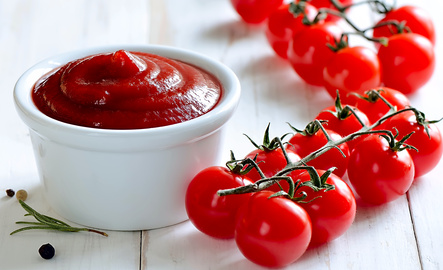
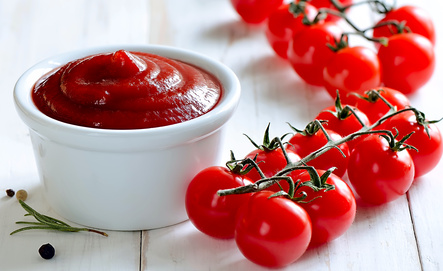
The irony is that tomato sauce may even be of benefit. Tomatoes contain vitamins (e.g. A, C & K), minerals (e.g. potassium & magnesium) and are rich in Lycopene (an antioxidant). It’s the lycopene that has gained most attention by researchers and the media. Whilst more studies are needed, claims are being made that tomato based products, such as sauce and soup, could actually help with an array of benefits from fighting various cancers to lowering cholesterol and rates of cardiovascular disease. Because it appears that when tomatoes are cooked their lycopene becomes more available to the body, it may mean that products such as tomato sauce are actually a beneficial addition to the diet.
Maybe Capello and Di Canio were misquoted, or somewhere along the line something was lost in translation, but there appears to be inaccuracies in the medias reporting. This just goes to show you shouldn’t believe everything you read in the press. The Telegraph claimed that Di Canio banned ketchup because of its high fat content, which is simply not the case; most ketchup’s have all but a trace of fat. Capello, it was claimed, banned ketchup in favour of a Mediterranean diet – a diet that in fact contains an abundance of tomatoes and tomato sauces, think ragu’s. Instead, it may be that ketchup was what the press picked up on, but it was the burgers and chips being eaten with the sauce that were the real issue with the Italians!